Garage Conversions in Hook, Hampshire
Garage conversion work in Hook deals with one of the youngest housing profiles anywhere in the Basingstoke area. Hook was a small rural hamlet until the railway station opened in 1885, and its real growth as a settlement did not begin in earnest until the 1960s and 70s, with further substantial development continuing through the 1980s, 90s and into the 2000s. Very little of the village predates the railway, and a large proportion of it postdates 1980 entirely.
Our Garage Conversion Services in Hook
What suits your property depends on which phase of Hook’s growth it belongs to rather than on preference. These are the five approaches we work with locally.
- Single garage conversions — on the earlier 1960s and 70s phases of the village
- Double garage conversions — common on the later executive-style developments
- Home office conversions — a dedicated electrical first fix, well suited to a village built around its railway station
- Bedroom conversions — built to the escape window and fire door requirements a habitable bedroom needs
- Partial garage conversions — keeping a utility area while converting the rest
Why Choose Us for Garage Conversions in Hook
- We identify the development phase of your property at survey, since Hook’s housing stock spans several distinct decades within a single village
- Modern estate construction assessed accurately, since post-1990s garages often use different insulation standards than older stock
- Building Regulations submission and inspection stages managed throughout
- Structural calculations provided where needed
- Fixed written quotation after survey, with no provisional sums left in the figure
Hook’s Growth and What It Means for Your Garage
Hook’s transformation from hamlet to village happened almost entirely because of the railway. The station opened on the line between London Waterloo and Basingstoke in 1885, and for decades afterward Hook remained a modest settlement clustered around it. The real expansion came later, from the 1960s onward, as commuting to London became increasingly practical and developers built successive waves of housing to meet demand from people wanting a village setting within reach of the mainline.
That layered, relatively recent growth is the defining fact about Hook’s garages. Properties from the 1960s and 70s carry the same integral single garage pattern common across much of Basingstoke from the same period. Later phases through the 1980s, 90s and 2000s brought larger plots, more double garages, and construction built to progressively tighter insulation standards — meaning a garage from a 2005 development already starts from a materially better thermal position than one built thirty years earlier, which changes how much upgrade work a conversion actually needs.
Tylney Hall, the substantial Victorian mansion and its parkland on the edge of the village, predates almost all of this residential development and has no bearing on ordinary conversion work, but it marks the older, rural character Hook had before the railway-driven growth took hold. The Whitewater river valley runs close to the village and shapes some of the more recent development on its edges, where plot layouts follow the contours of the land rather than a strict grid.
Because so much of Hook was built within living memory to broadly similar standards, conversions here are often more predictable than in villages with a longer, more varied building history — though the specific decade still matters enough that we confirm it at survey rather than assume.
Access across Hook’s estate streets is generally good, since most of the development from the 1980s onward was laid out with modern parking and driveway standards in mind. The earlier 1960s and 70s phases nearer the station sometimes have tighter side access, similar to comparable estates elsewhere in Basingstoke from the same era, which is worth checking before assuming scaffold access will be straightforward.
Serving Hook and the Surrounding Area
We work throughout Hook and across the wider Basingstoke area, including Chineham, Old Basing, Tadley and Overton, as well as Basingstoke itself.
Structural requirements for floors, insulation and fire escape in converted garages are set out by LABC.
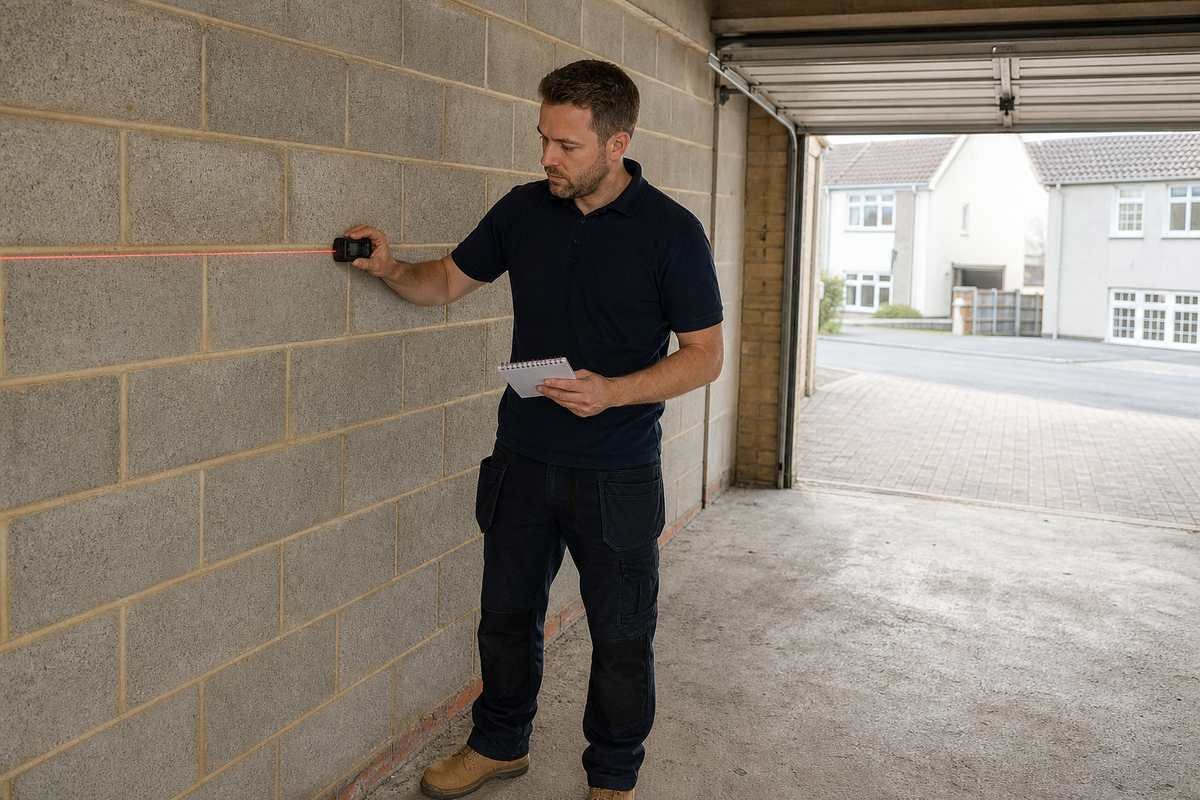
If you are considering a garage conversion in Hook, a survey will establish what your garage can take and what the work will realistically cost. There is no charge and no obligation.